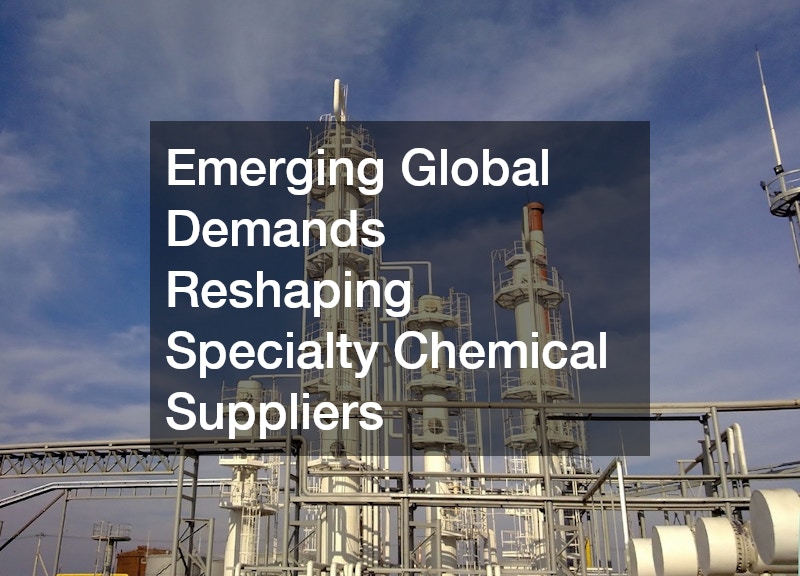
The global manufacturing landscape is undergoing a massive transformation. Driven by stringent environmental regulations, shifting geopolitical alliances, and a rapid push toward high-tech industrial applications, the chemical sector is facing unprecedented pressure. At the heart of this evolution are the companies that formulate the high-value, highly functional materials keeping modern life moving. Understanding how these global forces reshape the industry is critical for any enterprise navigating the modern market.
Shifting Focus Toward Sustainability and Circular Economics
For decades, industrial manufacturing operated on a linear “take-make-dispose” model. Today, that framework is being completely dismantled by regulatory mandates and consumer demands for sustainability.
Major economies are tightening restrictions on carbon emissions, hazardous waste, and non-recyclable materials.
This macro shift is profoundly altering how specialty chemical suppliers design their products. Instead of focusing solely on performance metrics like durability or heat resistance, manufacturers must now evaluate the entire life cycle of a chemical compound. There is a booming demand for bio-based alternatives, biodegradable formulations, and materials that facilitate easier recycling at the end of a product’s life.
For instance, the automotive and electronics industries are actively looking for alternative resins and solvents that do not emit volatile organic compounds (VOCs). Suppliers who traditionally relied on petroleum-based feedstocks are aggressively investing in green chemistry to engineer high-performing components derived from agricultural waste or renewable plant matter.
Supply Chain Resilience in an Unpredictable World
If the past few years have taught global industries anything, it is that tightly wound, single-source supply chains are incredibly fragile. Geopolitical tensions, trade disputes, and localized climate disruptions have caused massive bottlenecks in material availability. In response, cross-border businesses are shifting away from just-in-time inventory models toward “just-in-case” regional diversification.
This shift means that international manufacturers are re-evaluating their vendor relationships. Companies are moving away from relying on a single mega-factory halfway across the world. Instead, they are prioritizing localized or “near-shored” partners who can guarantee shorter transit times and a lower risk of customs delays. Consequently, regional specialty chemical suppliers are experiencing a surge in domestic partnerships as businesses seek to insulate themselves from unpredictable global logistical shocks. Building localized redundancy is no longer seen as an unnecessary expense; it is now viewed as an essential insurance policy for operational continuity.
The Technological Boom and Advanced Material Demands
Another massive catalyst for change is the rapid acceleration of high-tech industries. The global push for electrification, semiconductor manufacturing, and advanced aerospace technologies requires materials that can perform under extreme, precise conditions.
Consider the electric vehicle (EV) market. An EV demands completely different chemical architecture than a traditional internal combustion engine vehicle. Battery packs require highly specialized thermal management materials, fire-retardant coatings, and advanced lithium-ion battery chemicals to maximize range and safety. Similarly, the global semiconductor push demands ultra-pure electronic chemicals and photoresists that can handle the microscopic scale of next-generation microchips.
To stay relevant, modern specialty chemical suppliers must operate more like tech firms than traditional bulk material processors. They must invest heavily in collaborative research and development alongside their clients to create highly customized formulations that meet these exact technological tolerances.
Digital Transformation and Smart Formulation
The internal operations of chemical formulation are also being reshaped by the digital revolution. Artificial Intelligence (AI) and machine learning are fundamentally changing the timeline required to bring a new chemical product to market. Historically, developing a specialized compound involved years of trial-and-error laboratory testing.
Today, advanced software can simulate molecular interactions and predict chemical performance before a single beaker is poured in a physical lab. This allows progressive specialty chemical suppliers to compress development cycles from years into months. Furthermore, digital tracking technologies allow for end-to-end transparency. Customers now expect full traceability regarding where raw ingredients were sourced, their exact carbon footprint, and proof of ethical compliance across the entire supply chain.
Innovation in Workforce Development
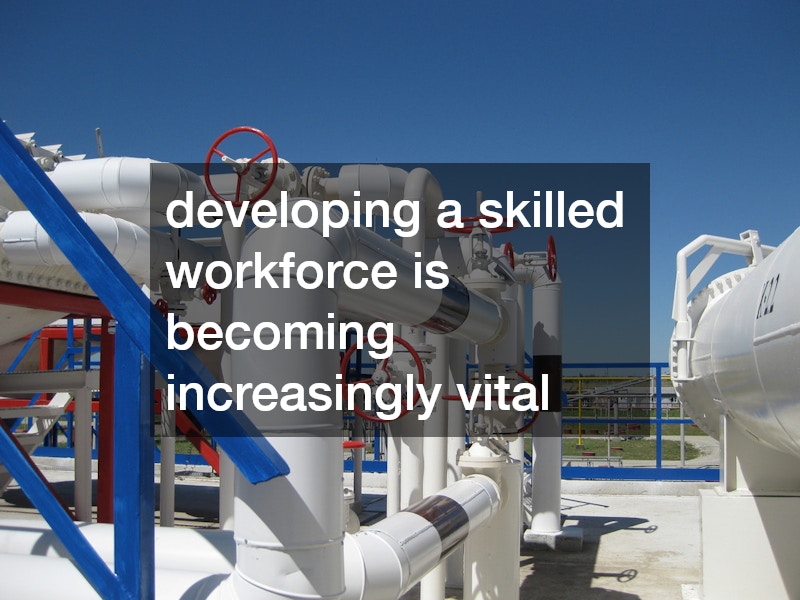
As the chemical sector evolves, developing a skilled workforce is becoming increasingly vital. Companies are investing in training programs to upskill employees with knowledge in sustainable practices and digital technologies. Partnering with educational institutions, businesses are expanding STEM initiatives to prepare the workforce for advanced manufacturing roles. This focus on education aims to ensure a steady pipeline of talent capable of driving innovation and maintaining competitive advantage. Implementing these strategies positions firms to not only adapt to the shifting landscape but also to spearhead pioneering advancements in the chemical industry.
The forces acting upon the chemical sector are diverse, powerful, and permanent. The suppliers who thrive in this next era will not be those who simply sell materials at the lowest price per gallon or ton. Success will belong to the agile organizations that embrace sustainable chemistry, build resilient localized logistics networks, and co-develop cutting-edge materials alongside the world’s most innovative technology sectors. Navigating these emerging global demands is challenging, but it also opens up an array of fresh opportunities for growth, evolution, and long-term industrial leadership.